
Roll out the construction paper and cue the lights – we’re turning your kids’ art table into a Tinseltown-inspired creation station!
These movie-inspired film reel drawing prompts are an incredibly fun way to inspire some art-making or dramatic play. Invite your kids to imagine the next summer blockbuster, or storyboard their way to an afternoon of screenplay-writing.
We’ve organized our collection by theme, so you can use the links below to jump straight to a specific topic of interest in this article…
These activities are designed to be flexible and adaptable, ensuring that children of all ages and abilities can join in the fun and learn something new. Whether it’s a solo project or a group activity, the key is to have fun and let creativity lead the way.
Lights, camera, crayons…let’s see what your little DuVernays or Spielbergs can dream up!
Note: We prefer to shop locally or use what we have at home, but this list contains Woodpeckers Crafts, Etsy, Blick Art Materials, Bookshop.org and/or Amazon affiliate links for reference. As affiliates (and Amazon Associates), we make a small commission on qualifying purchases.*
BASIC SUPPLIES:
OPTIONAL SUPPLIES:
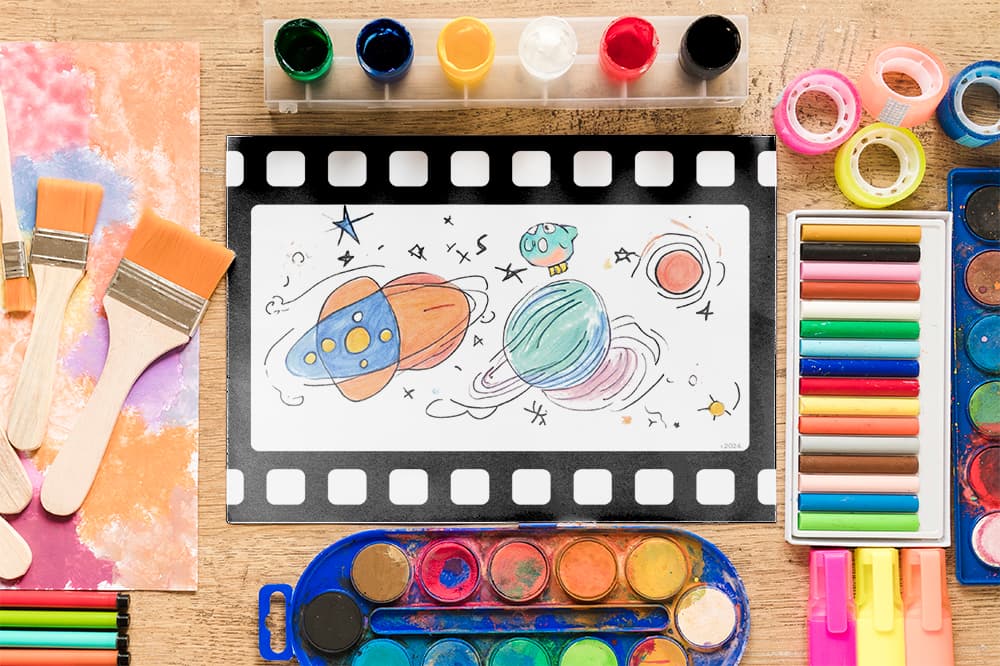
Draw your own film strip outline or use our movie reel templates, then invite kids to create a gallery of movie-inspired masterpieces, each telling a separate piece of the same story in a series of frames. They can draw their favorite moments, or invent an entirely new storyline.
What better way to explore the concept of continuity in storytelling than by creating a flipbook animation? Printed or hand-drawn movie reel pages can be turned into a classic flipbook, with each frame showing a slight change from the last.
From a bouncing ball or changing smiley face to more complex progressions like a planted seed growing into a sprouting plant, or a caterpillar transforming into a butterfly. As they flip through their creations, they’ll get a firsthand lesson on how animated movies are made, one frame at a time!
You can’t forget the credits! Kids can write their names in a fancy script, add some drawings that represent their personality, and design their own “end credits” reel. This project can be a fun way to practice handwriting, and sign off on their series’ of artworks.
Okay, so you have a few ideas to help you set the stage for this drawing activity – but how about the drawings themselves? While some kids may hit the ground running, others may appreciate a prompt. Here are just a handful of ideas you could suggest to get them started:
Extend your movie drawing exercise by using them as the backdrop for film-inspired play. Kids can sketch out different scenes and then use toys or act out the parts themselves.
It’s a blast to see their interpretations come to life, and as a bonus, they’ll be doing a bit of creative reasoning as they figure out how to translate their 2D frames into 3D spaces.
What’s a movie without some snappy dialogue? Kids can create their own comic strips within the reels, complete with speech bubbles. This is a fantastic way to practice writing and punctuation, and express emotions through words, setting the stage for them to act out the scenes and give voice to their characters.
Assigning roles and acting out scenes can be a a great activity for groups. Using selected movie reel drawings, kids can decide who plays which part in their drawn-out scenes, creating an opportunity to learn about different perspectives and the basics of scriptwriting.

Using finished kid-created storyboards for collaborative play can turn an ordinary afternoon into an exciting afternoon of film creation – right in your living room or classroom. Here’s an example lesson plan to help you get started:
Kick things off by deciding on a movie plot. The group can brainstorm an original story or reimagine a classic tale or favorite movie. This sets the theme and ensures that everyone is on the same page – or frame, in this case.
Once you’ve got your plot, divide the storyboard templates among the group, assigning different parts of the story to each participant. Breaking it down ensures that everyone gets their opportunity to contribute a unique piece to the bigger picture and gives kids a clear slice of the story to focus on.
As each child works on their part, encourage discussion and sharing of ideas. They can talk about their scenes, ask for input, and offer suggestions to others. This collaborative spirit will help create a sense of connection between kids and their individual parts of the story as well.
After the storyboards are complete, line up the storyboards, letting kids work out and settle upon a final order and giving them a visual representation of the movie they’ve created together.
Now for a taste of classic Hollywood: have the kids “pitch” their movie storyboards to the class. They can explain their creative choices and the story behind their frames (an excellent way to work on confidence in public speaking).
The grand finale is an awards ceremony where each little screenwriter is honored with a mini Oscars statuette. Writing a movie is a HUGE accomplishment, after all.
By the end of this collaborative play session, not only will the kids have a series of storyboards that tell a tale, but they’ll also have learned about cooperation, respect for others’ ideas, and the joy of shared achievement. Bring on the collaborative creativity!
GETTING READY TO TRY this?
I love seeing all the ways people make these ideas their own! If you're sharing the results of one of our projects, mention or tag me with @barleyandbirch, or share it in the comments of one of our Pinterest project pins.