
The Value of Fantasy Play
Helping Your Children Embrace Fantasy and Imagination

As kids, we were all explorers. The world was a vast, uncharted territory, full of endless possibilities and adventures. Every closet could conceal a secret passageway; every sandbox a sprawling desert; every cardboard box a spaceship. The power of fantasy and imagination.
From boosting creativity and innovation to building emotional intelligence and social skills, even beefing up problem-solving and decision-making abilities – pretend play is a game-changer.
The Significance of Fantasy Play
Before we jump right into the nitty-gritty of how to encourage imaginative play, it’s crucial to understand why it’s so important.
As adults, it’s easy to lose our sense of fantasy to logic, forgetting that the heart of creativity, innovation, and empathy beats within the imagination. Children, though, naturally excel when it comes to fantasy, and it’s why imaginative play is so important to a child’s cognitive and emotional development.
The Case for Daydreamers: Benefits of Nurturing Imagination
Allowing kids to play pretend provides them with a toolbox of important skills and abilities they’ll need as they grow and progress through life.
As a respected early childhood education researcher and advocate of imaginative play, Dr. Vivian Gussin Paley consistently stressed the value of fantasy in nurturing creativity. Her numerous studies and publications highlight the importance of storytelling and role-playing as tools to help develop children’s imagination and innovative thinking (Paley, 2009). She believed that by allowing children to dabble in the world of fantasy, we unlock their potential to become creative thinkers and innovators.
Developing Emotional Intelligence
Turning toward the emotional side, in his book Children, Play, and Devleopment, author, and Professor of Human Development and Psychology Fergus Hughes emphasizes the importance of fantasy play in children’s social and emotional development. He suggests that when children engage in fantasy play, they not only have a space to express their own emotions but also learn to understand the emotional responses of others. This experience plays a crucial role in shaping their emotional intelligence and social skills – foundations for building strong relationships in the future.
Encouraging Problem-Solving and Decision Making
Fantasy play also creates a safe space for kids to come face-to-face with new challenges, and learn how to navigate them. Dr. Stephanie M. Carlson, professor and director of research at the Institute of Child Development, University of Minnesota, suggests that imaginative play is a form of “simulation” that can improve children’s problem-solving abilities and decision-making skills. Pretend play allows them to make choices, experiment with different solutions, and understand the consequences of their decisions in a safe, controlled environment (Carlson & White, 2013).
Across the board, studies from esteemed developmental psychologists suggest that fantasy plays an enormous role in cognitive development. Nurturing this form of play, especially during the early stages of life, sets the stage for successful academic performance, fostering critical thinking skills that will benefit kids throughout their educational journey and beyond.
Fostering Self-Expression and Confidence
Imaginative play impacts identity and self-esteem as well! As children role-play different characters, they explore various aspects of their identity, learn to express themselves, take risks, and make mistakes.
Intersecting Worlds: Imagination, and Associative Play
When we look at the landscape of children’s play, we often find that the boundaries between different types of play are more fluid than rigid. This is especially true when considering fantasy or imaginative play and associative play. Both are significant aspects of children’s development and, interestingly, they often overlap and interact in beautiful and enriching ways.
Fantasy play, where children immerse themselves in imaginative scenarios, characters, and situations, encourages them to stretch their creative muscles, tap into their emotions, and experiment with various social roles. In this type of play, a simple cardboard box can become a spaceship, a dragon’s lair, stove, or store counter.
Associative play, on the other hand, refers to when children begin to interact more directly with each other during play, often around three to four years of age. At this stage, they start to engage more with each other, sharing materials, following similar themes, or participating in the same storyline (even if each child sees the play scenario somewhat differently).
These two types of play intersect with dramatic role-playing. When kids engage in dramatic role-play, they’re stepping into the shoes of different characters and navigating imagined scenarios – combining the social interaction of associative play with the creative possibilities of fantasy play.
In this overlapping space, children are given the opportunity to navigate social dynamics while exercising their creative and imaginative skills. They learn to understand others’ perspectives, solve problems, make decisions, and express themselves. When it comes to fostering children’s cognitive, social, and emotional development, the combined power of fantasy, imagination, and associative play can work wonders.
Types of Fantasy Play
Just as every child has a unique personality, the way they make-believe can also be wonderfully unique. From hosting a tea party for stuffed animals to fighting off dragons or running a mini-city, kids find their own ways to tap into their imaginations.
These different types of fantasy play reflect their unique personalities and nurture their creative minds in so many incredible ways. It’s worth it to explore a few different imaginative play techniques and see how your own little dreamer responds. Here are just a few ways kids can engage in fantasy play…
Inspiring Dramatic Play Ideas
With a sprinkle of creativity and a dash of make-believe, dramatic play can turn an ordinary day into an extraordinary adventure for kids.
Whether they’re slipping into the shoes of a brave knight, a caring doctor, or a hurried chef, dramatic play offers kids a fun way to explore different roles, learn new skills, and expand their understanding of the world. Below, we’ve gathered a few hand-picked dramatic play ideas to stir up your little ones’ imaginations for hours of imaginative play.

Travel Dramatic Play

Pretend Pet Play

Adventure Dramatic Play

DIY Bakery Play

DIY Sushi Restaurant

DIY Market Play

Pretend Mail Play

Pretend Fairy Play

Explorer Dramatic Play
Creative Small World Play Ideas
Small world play offers kids an opportunity to create their own unique worlds, rooted in reality or purely imaginative. By creating and navigating their own mini-environments, children can explore big concepts and scenarios in a tangible, accessible way.
A fairy garden in a flower pot, a bustling city filled with toy cars, or an undersea world in a puddle-filled sandbox. The only limit is their imagination! To get you started, you can explore a few of the small world play ideas we’ve created over the years by scrolling through the collection below.

DIY Cardboard Box City

DIY Toy Cars

DIY Mini Food Trucks

DIY Peg Doll Fairies

A DIY Cardboard Castle
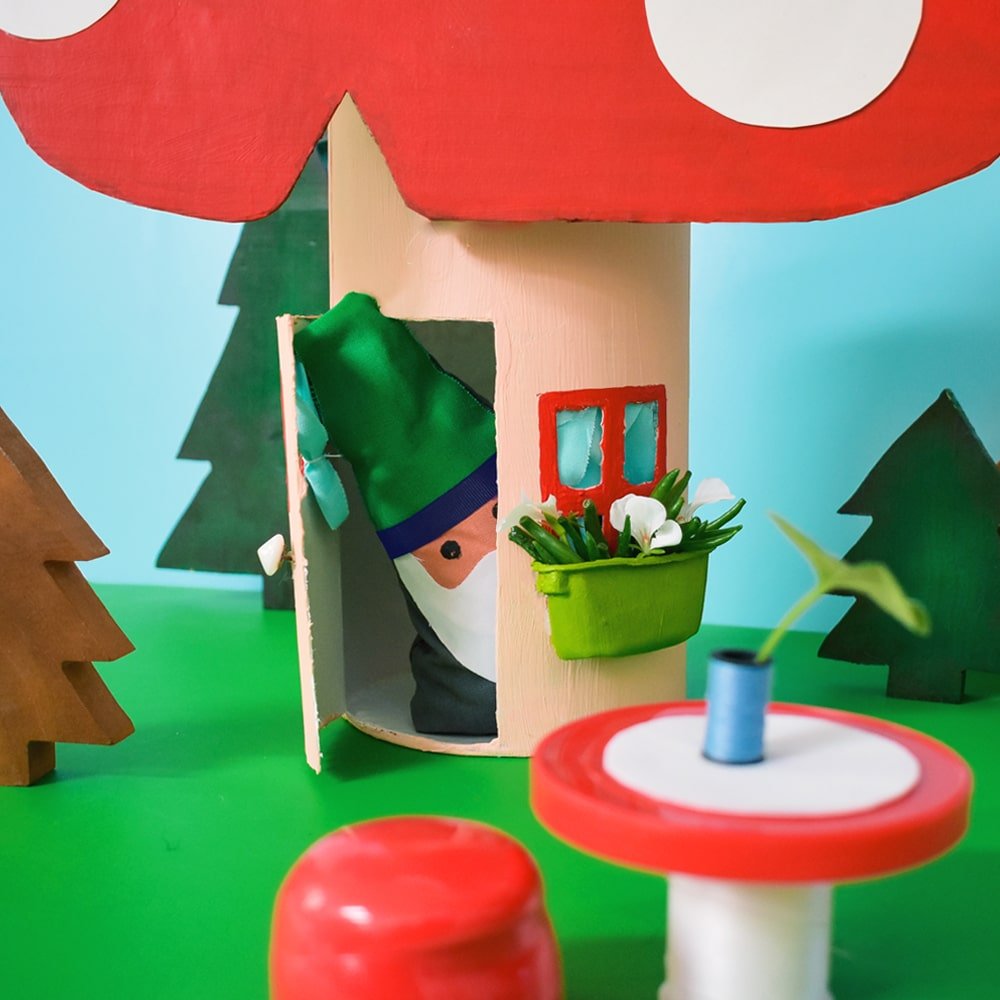
Toadstool Gnome Homes

A DIY Dollhouse Pool

Cardboard Sandcastles

A DIY Beach Dollhouse