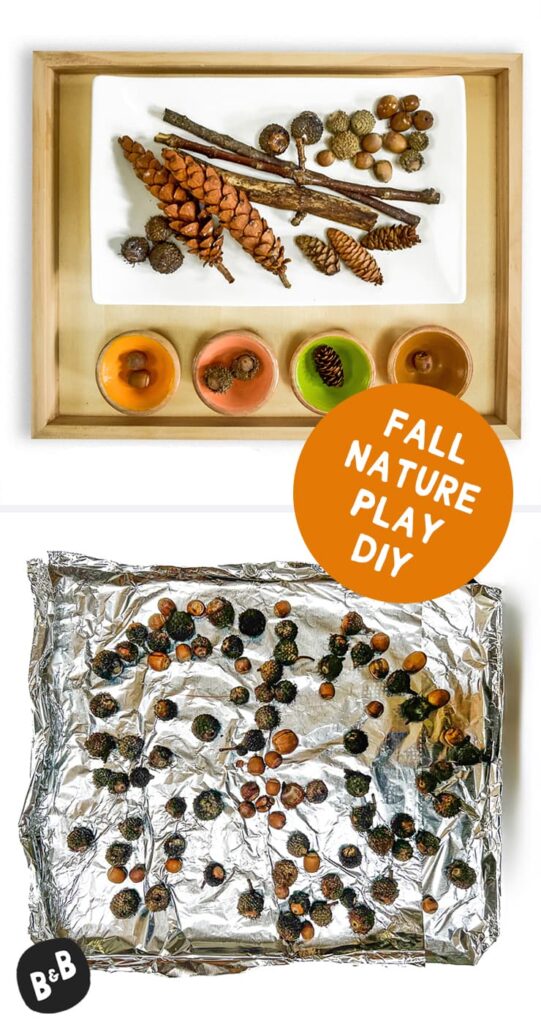

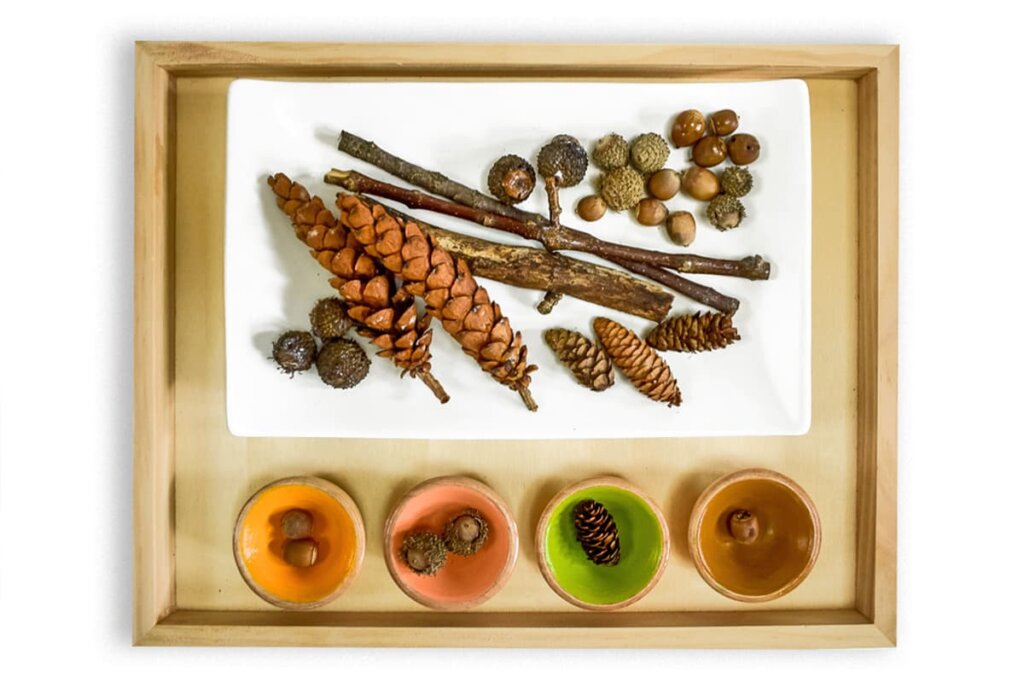
Learn how to easily prepare and preserve fall nature supplies like acorns, pinecones, and sticks for long-term indoor nature play, observation and study, or kids’ crafting.
Use the links below to jump straight to a specific topic of interest in this article…
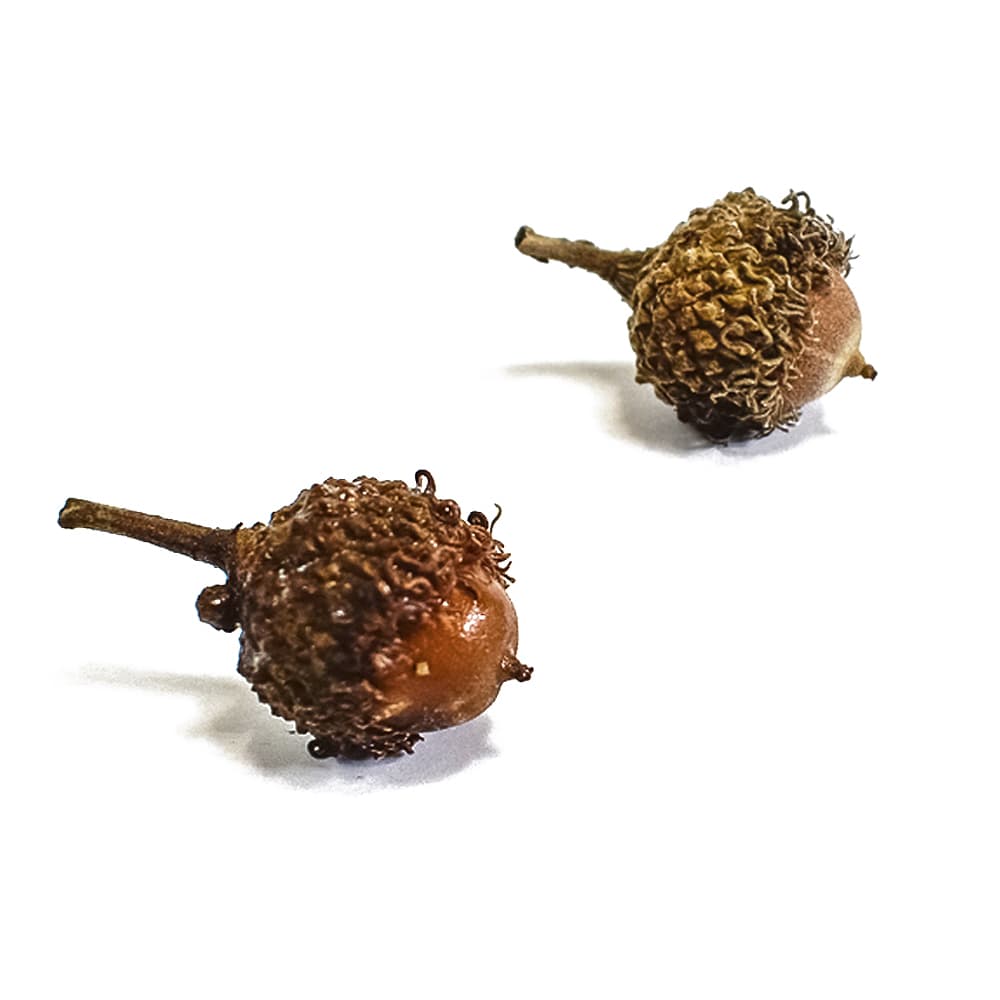
One of my favorite signals that fall is on the wing is the sprinkling of richly-colored acorns, pinecones, and twigs across my backyard and neighborhood. Our hungry squirrels are quick to get a jump on the good stuff, leaving lots of stray caps, broken shells, and acorns dotted with the tiniest of little holes behind that I like to rummage through for good nature play supply finds!

Now, if I were going to be using these for a quick impermanent art activity, an outdoor tinker space, or just a day of play before tossing back outside, I wouldn’t do a bit of cleanup or prep, but I like to keep a few handfuls of cool nature finds in a bin for sensory activities, art observation, and impromptu crafting.
For THOSE items that I save for long-term use, I follow a pretty simple process to prep and preserve them, and here’s why…
While a bit of dirt and debris doesn’t bother me, our household is fairly allergen-sensitive. These lovely nature finds can sometimes carry in molds or have leftover residue from outdoor sprays that irritate allergies. And those pinholes in the acorns?
Those are made by nut weevils – nothing to fret over, but they do leave little nut weevils larvae inside which will come crawling out this time of year – a sight that might not always be a welcome surprise.

Especially if using these natural supplies in group settings, it’s always a good idea to do just a bit of cleanup and prep before use and long-term storage. I thought I’d share the easy routine I’ve adapted and adopted. From a quick 20-minute bath to a more comprehensive multi-step oven-drying and preserving process – you can take the bits and pieces you need or have time for and try them yourself.
Better yet, your kids can help as you clean, dry, and finish these up to become treasured nature play tools. It’s a wonderful opportunity to incorporate practical skills and observe how these various seeds, pods, and sticks respond to heat.
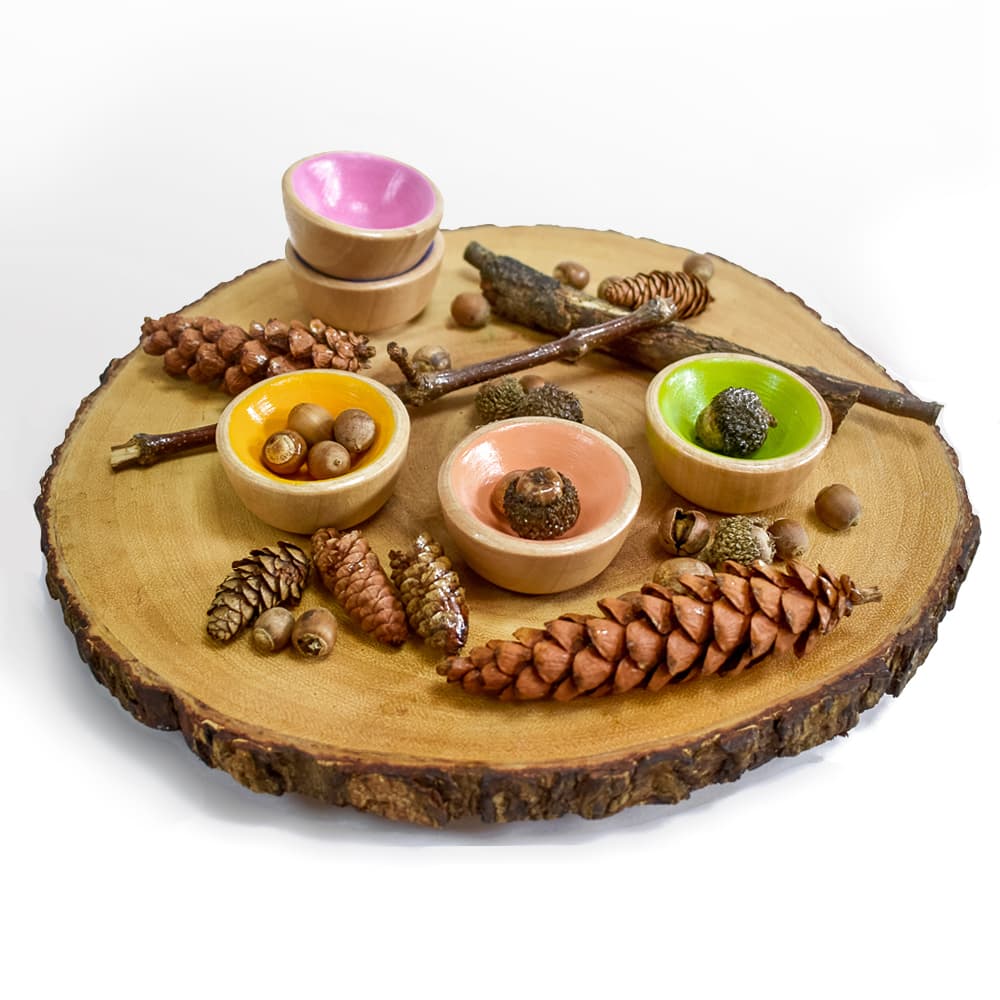
I use white vinegar in my cleaning process. Although I will focus on acorns, pinecones, and sticks, as a general rule, you can throw just about anything into a water bath with white vinegar if you’re simply looking for a quick and easy natural disinfectant.
I prefer white vinegar rather than bleach or stronger cleaners simply because it’s natural, non-toxic, and gentler overall solution.
For examples of the many ways we’ve used natural fall supplies in kids’ art, crafts, and play activities, check out our loose parts leaf play ideas, paper bag mushrooms, gradient leaf banners, seed mosaic bird feeders, or twig and pinecone display hangers.
Note: We prefer to shop locally or use what we have at home, but this list contains Woodpeckers Crafts, Etsy, Blick Art Materials, Bookshop.org and/or Amazon affiliate links for reference. As affiliates (and Amazon Associates), we make a small commission on qualifying purchases.*
BASIC SUPPLIES:
OPTIONAL SUPPLIES:
Safety note: If you have reason to be concerned about the risk of tree nut allergies (*different than a peanut allergy!*) our guidance is to refrain from acorn play (even when cleaned, dried, and preserved) until allergy testing has confirmed handling is safe. For more detailed information, scroll to the bottom for our note on tree nut allergies.

Discover the best ways to prep and preserve natural supplies for your kids’ playtime. Our guide will help you maximize nature’s offerings you plan to save for long-term use or indoors.
Head out to the backyard, peruse the neighborhood, or stop by a park and see what you can find! We try to take only what we need and be mindful of the many ways these supplies provide food and habitats to creatures of all shapes and sizes.
Use an old rag to brush off any large concentrations of dirt, and trim any sharp twigs with garden shears, heavy scissors, or a handsaw.
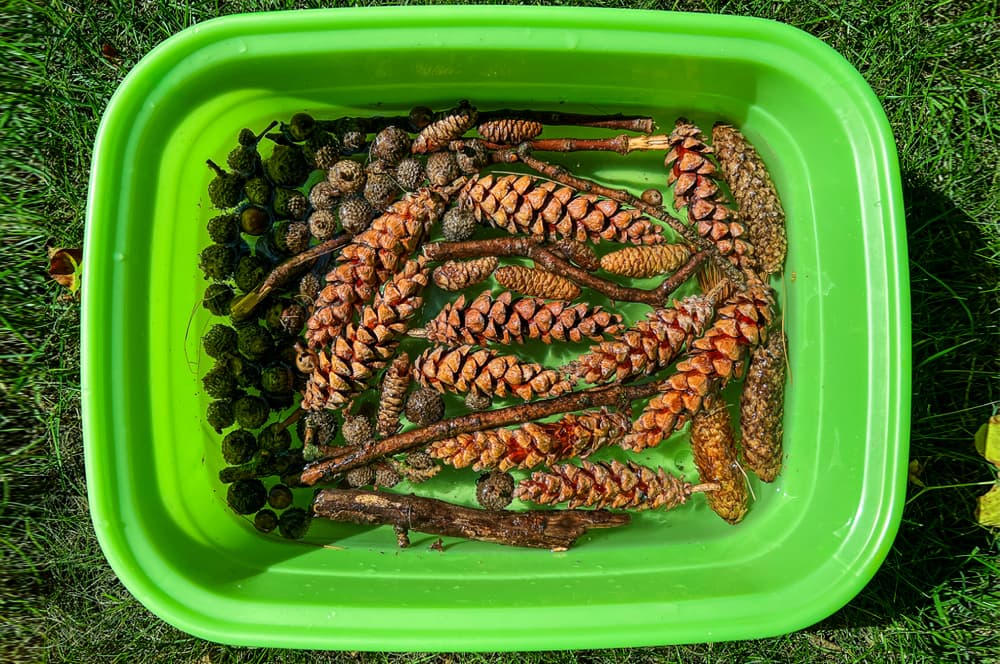
Grab a bin or pail, fill it with warm water, add a quarter to one-half cup of white vinegar, then toss in your found nature supplies for a quick 20-30 minute bath!
White vinegar has proven antifungal and antibacterial properties, so it’s a great alternative to bleaches or other chemical cleaners for small-scale disinfecting projects like this.
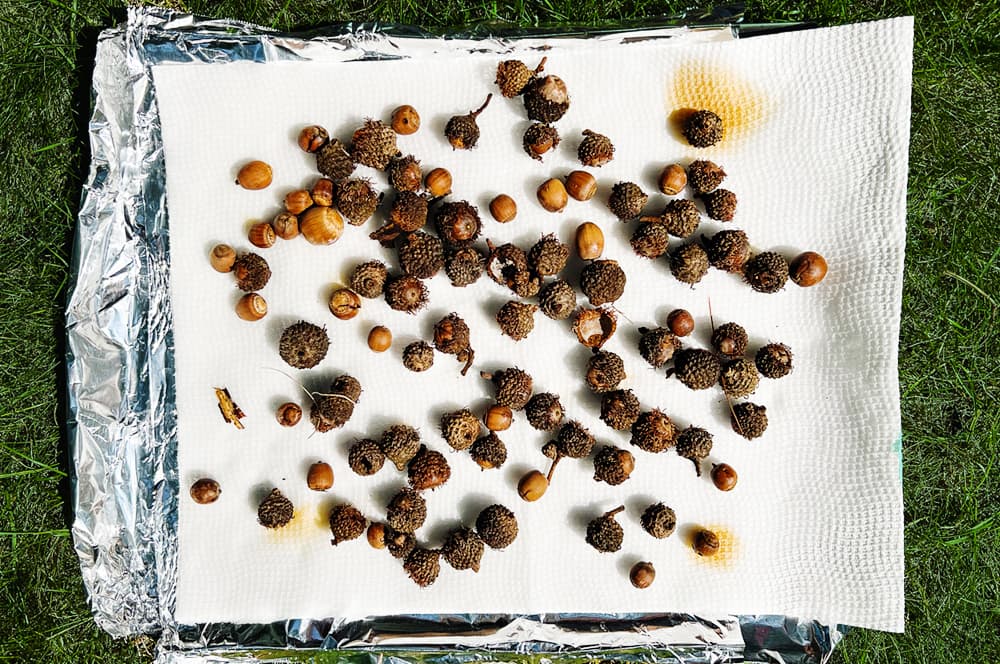
Once you’ve rolled them around in the bath and let them sit for a bit, lay out all of your nature supplies on paper towels or old rags and let them dry (preferably in the sun if possible!).
If you’re short on time or won’t be saving these for more than a few days, you could stop right here. Let your supplies dry outside for at least 24 hours, then bring them in for short-term use.
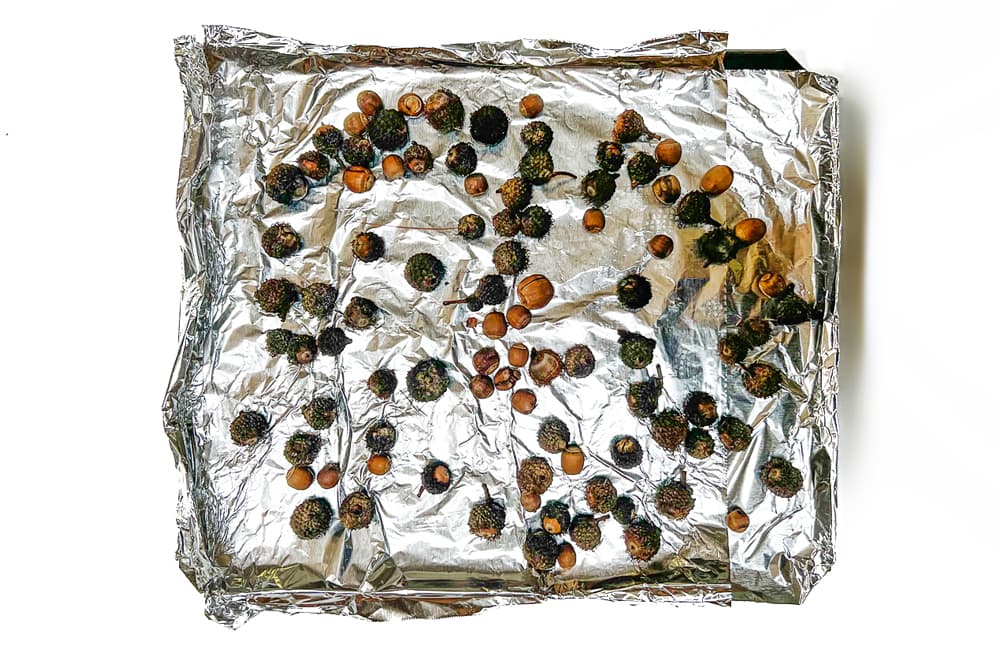
If you plan on keeping these for quite a while, a good drying-out in the oven is a must because it removes the moisture in all those nooks and crannies. Preheat the oven to 200 degrees.
Covering your baking sheets is an essential step for two reasons: If you’re drying pinecones, it keeps sap that seeps out from gumming up your baking sheets. Folding the edges of the foil up also ensures there won’t be any small bits of bark or residue that could fall to the bottom of the oven and create a fire hazard.
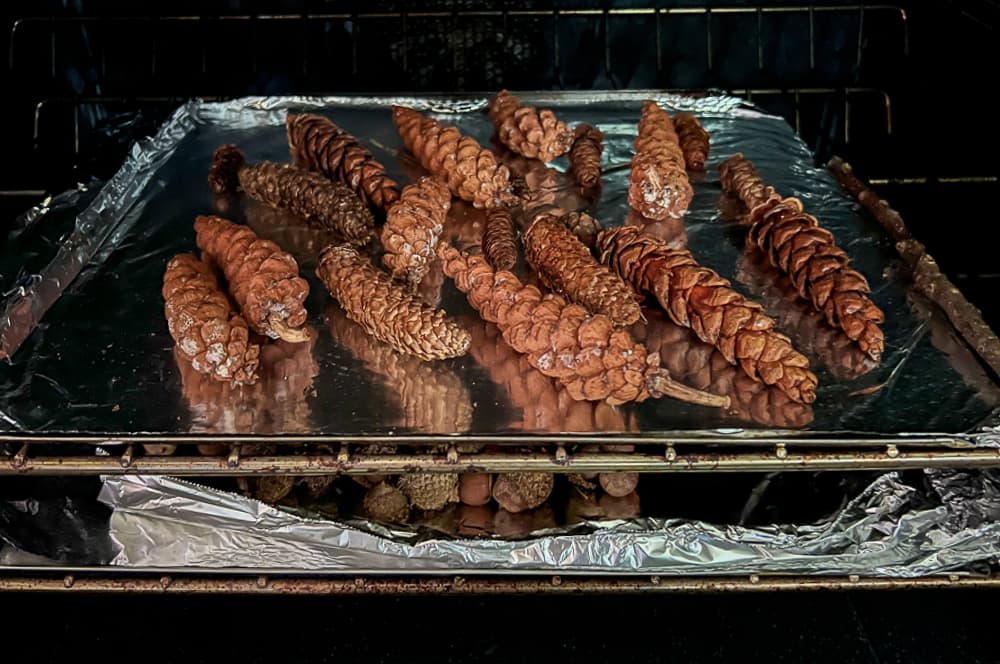
As a general rule of thumb, I skip putting sticks in the oven as they seem to dry out quickly in the open air and, honestly, make me a bit nervous in the oven – ha!
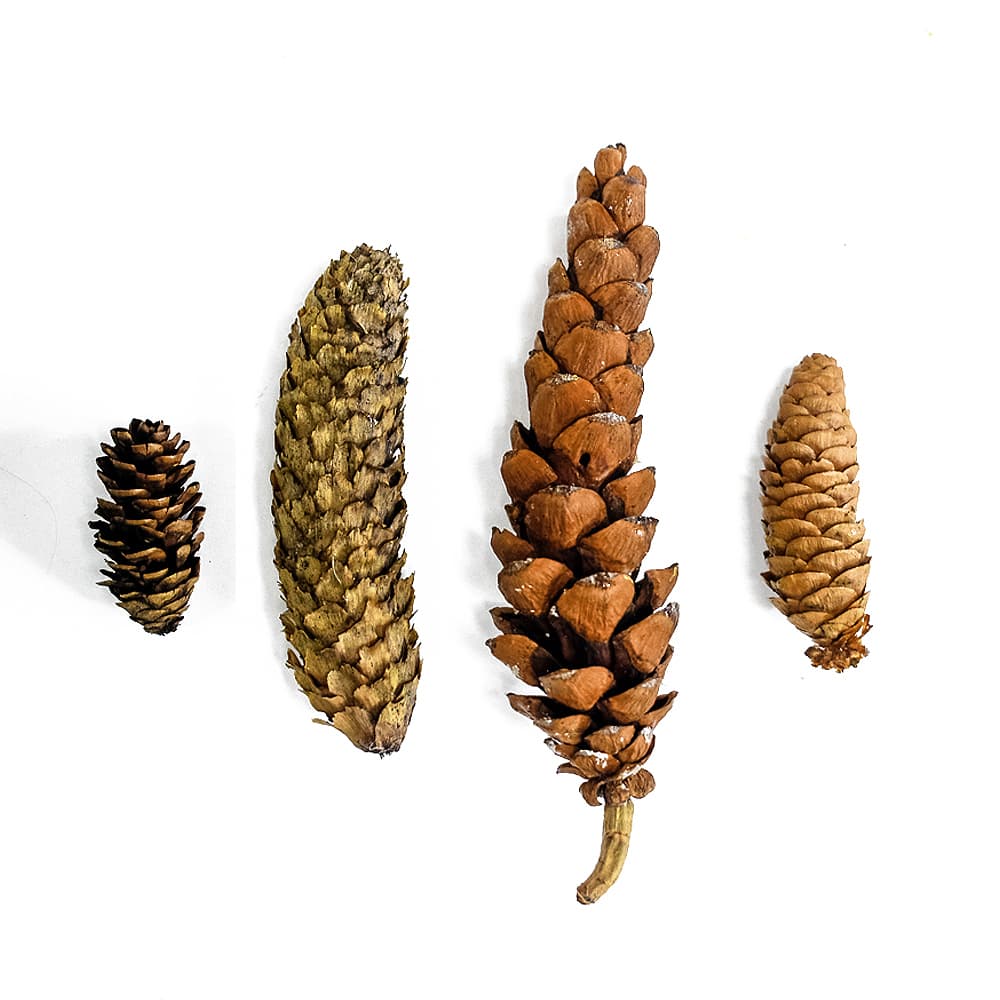
For the acorns and pinecones, bake on separate trays at 200 degrees Fahrenheit – watching the oven continuously for safety’s sake. My pinecones usually take about 20-30 minutes to dry – you’ll know they’re ready when the scales begin to spread open. I typically leave my white pine pinecones in for another 15-20 minutes, so the sap runs – it gives them an excellent, natural gloss that dries hard (and smells lovely!).
The acorns take about 2 hours – there isn’t really a “sign” they’re done, but they may begin to brown and get too warm if you leave them in much longer. Once cool, your nature supplies are ready for use in arts, crafts, and play activities!
I use this optional step sparingly, but you may prefer it depending on how you use your supplies. If you’d like your supplies to have a glossier finish, spread them out on wax paper, spray them with a sealant, or brush on a layer of Mod Podge (or a similar clear finish). Wait 24 hours to cure completely before use.
I’m trying to be more conscious of how we use, and eventually dispose of, our natural supplies. I’ve opted to finish *just a very small selection* of our nature supplies – you can let the pros and cons below help you decide what you’d like to do!
Note: We prefer to shop locally or use what we have at home, but this list contains Woodpeckers Crafts, Etsy, Blick Art Materials, Bookshop.org and/or Amazon affiliate links for reference. As affiliates (and Amazon Associates), we make a small commission on qualifying purchases.*
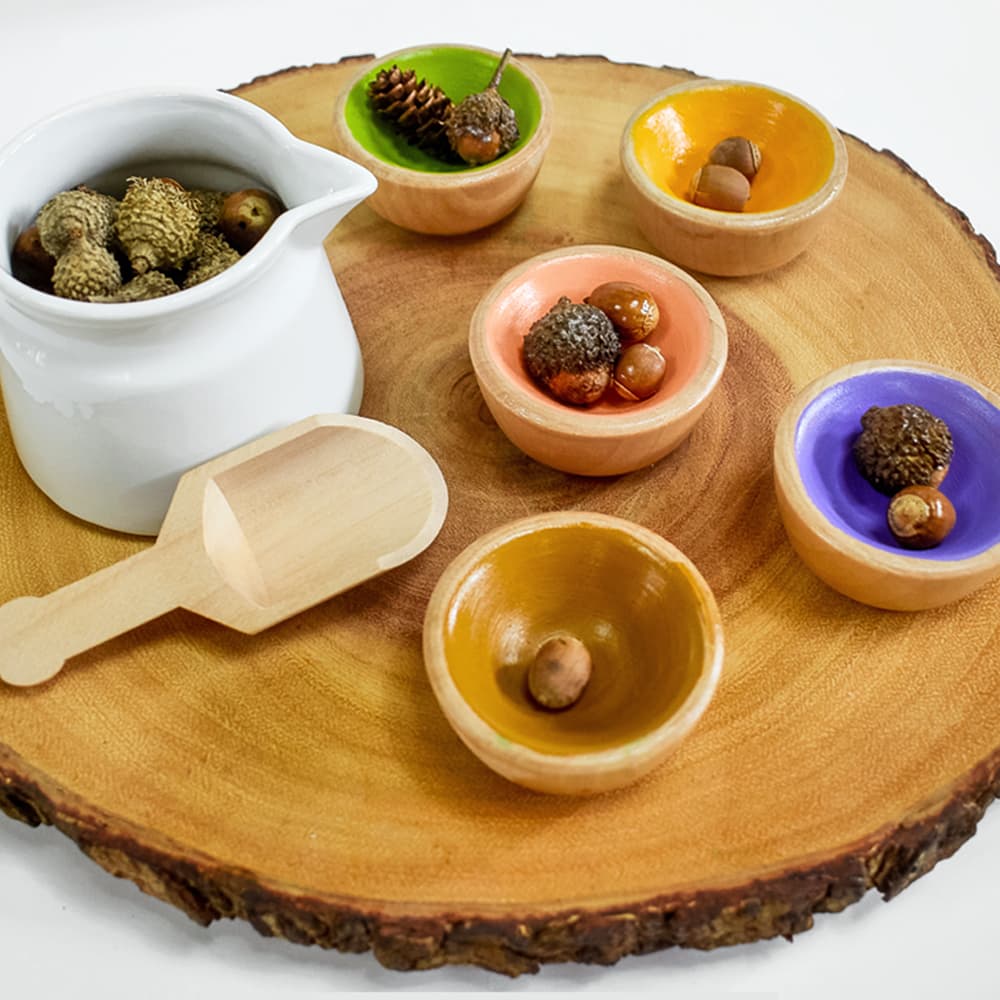
Unlike peanuts, acorns (…and walnuts, hickory nuts, pecans, etc.) are tree nuts, not legumes. While children can develop tree nut allergies, peanut allergies, and tree nut allergies don’t go hand-in-hand – a child may have an allergy to one and not the other. As stated above, if you are concerned about the risk of nut allergies, our guidance is to refrain from playing with acorns (even when cleaned, dried, and preserved) until testing has confirmed handling is safe. Wooden acorns are a decent substitute if you’re unsure!
The Asthma and Allergy Foundation of America has this to say about acorns: “Acorns are botanical nuts of oak trees. They are not a common allergen. Anaphylaxis (a severe allergic reaction) due to contact with acorns would be very rare. There are case reports in the medical literature of allergic reactions after eating acorns. This was thought to be caused by cross-reactivity due to a pollen allergy and not due to nut allergy. Contact with acorns would pose a low risk of systemic reactions, even in someone with a tree nut allergy. Washing with soap and water would get rid of the allergen.”
When it comes to touching or inhaling other types of fallen tree nuts, according to the American Academy of Allergy, Asthma & Immunology, “there is no significant risk associated with a tree nut allergic person engaging in activities in close proximity to a tree, even with nuts on the ground around the tree.“ But it should be noted that skin contact with nuts outside of the shell does pose a potential risk, and indoor aerosol inhalation could cause an aggravation (though rare).

*A note about affiliate links: We strive to use simple, earth-friendly supplies that can be purchased locally whenever we can, but sometimes we find the best universally available options, a rare eco-friendly find, or a niche product only available on Blick Art Materials, Amazon, Etsy, or Woodpeckers Crafts. When included in our supply list, these products are affiliate links, and if you click through to make a purchase we receive a small commission that helps us re-order these supplies!
GETTING READY TO TRY this?
I love seeing all the ways people make these ideas their own! If you're sharing the results of one of our projects, mention or tag me with @barleyandbirch, or share it in the comments of one of our Pinterest project pins.