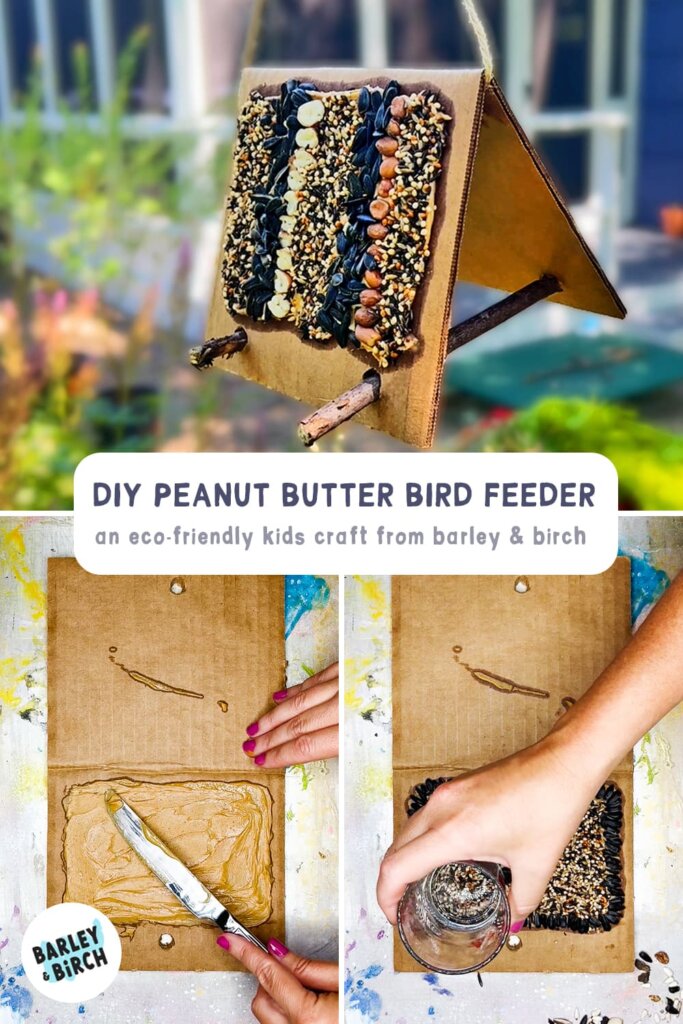

A twist on the classic cardboard tube bird feeder craft, this project invites kids to play with patterns and experiment with natural supplies for cool handmade bird feeders that are totally bird-safe!
Use the links below to jump straight to a specific topic of interest in this article…
One of the fun things about living close to the Mississippi River is the variety of birds that visit our neighborhood. More than 325 bird species make a trip along the Mississippi Flyway every year.
While most of them stick fairly close to the river’s edge, the marshes and small lakes surrounding our neighborhood get quite a few seasonal visitors, and we’ve spotted a handful of unique visitors right at our very own feeders.
Watch the quick tutorial below to see how these mosaic seed bird feeders are made!
Music: Mean It by Mona Wonderlick / Support the artist here
Our August days have been warm, but we’ve already dipped back into the fifties a couple of nights, and up here in the North, migration season has officially begun for a few species of birds.
Of course, you don’t have to live near rivers or lakes to enjoy birds in your backyard. These homemade bird feeders are a great way to attract your local feathered friends.
For more backyard bird activities visit the tutorial for our kid-made, bird-safe bird’s nest helper, gather great reads from the best bird-themed books, or our big collection of over 50 spring gardening activities for kids.
Note: We prefer to shop locally or use what we have at home, but this list contains Woodpeckers Crafts, Etsy, Blick Art Materials, Bookshop.org and/or Amazon affiliate links for reference. As affiliates (and Amazon Associates), we make a small commission on qualifying purchases.*
BASIC SUPPLIES:
OPTIONAL SUPPLIES:
Safety Note: Remember to thoroughly wash hands before (and after) this project, and be mindful of nut/seed allergies when picking your birdseed mix and spreadable supplies.

Learn how to create a stunning and eco-friendly bird feeder using seeds! Our step-by-step guide will teach you everything you need to know to make a beautiful seed mosaic bird feeder that will attract birds to your garden.
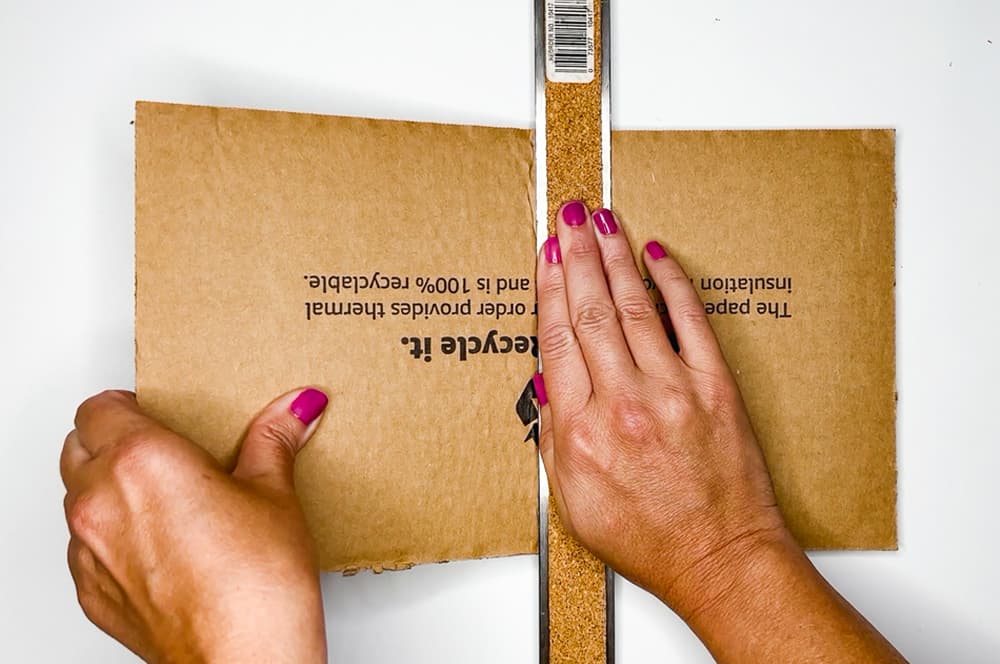
Use scissors or a utility knife to cut a rectangle from a cardboard box. Our rectangle was about 11.5 inches by 6 inches. Use a ruler to find the center, then fold your cardboard in half lengthwise to create a crease in the middle.
It’s essential to use plain cardboard – free of glues or tapes and unprinted on at least one side. The printed side you see above won’t be the side the birds eat from.
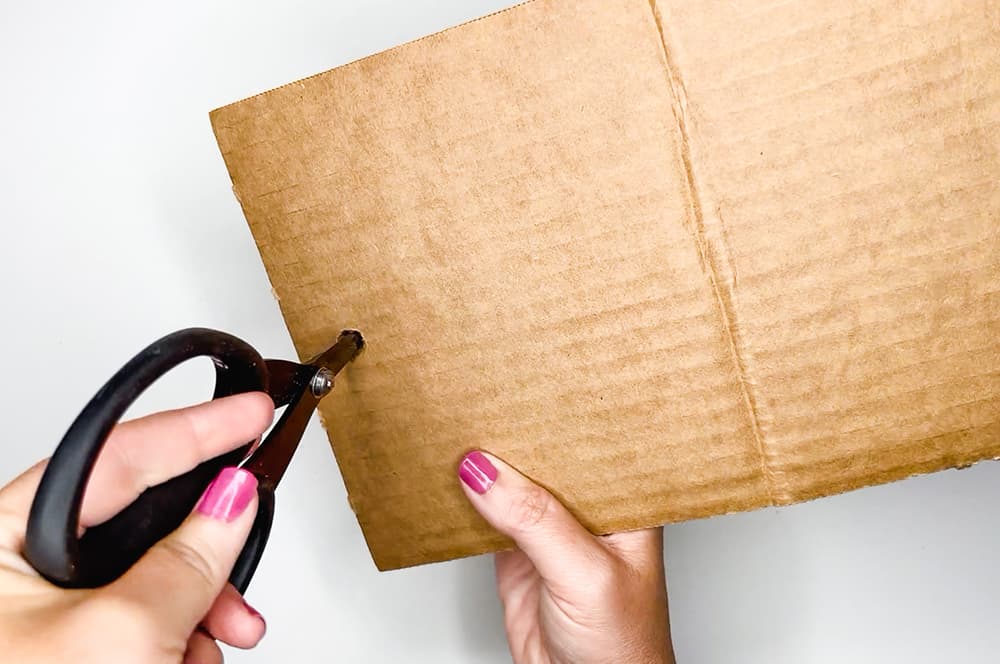
Near the bottom of your cardboard, at the center (on both sides) make a hole with scissors. This is for a stick perch, so you want the hole to be about the same as the diameter of your stick.
You can add just one stick perch (as I did for our video example) or two on either side (as I did for our second feeder example).
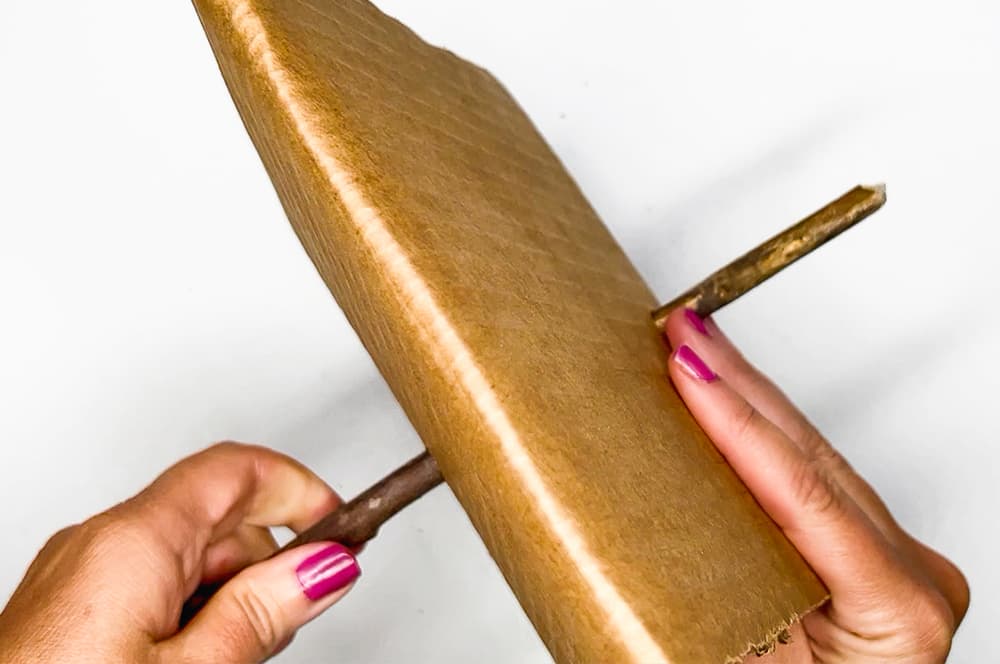
Test to ensure your stick perch will fit through the holes you’ve made.
Once you’ve made sure it will fit, remove it and lay your cardboard flat.

Spread a 100% natural nut butter, coconut oil, or palm-free shortening onto one-half of your cardboard. Kids can also use a small spatula, popsicle stick, or even their hands to spread peanut butter on the cardboard.
Note: I find it easiest to do this kind of work on a cookie sheet. It will keep the seeds confined and any stray peanut butter from getting on clean surfaces.
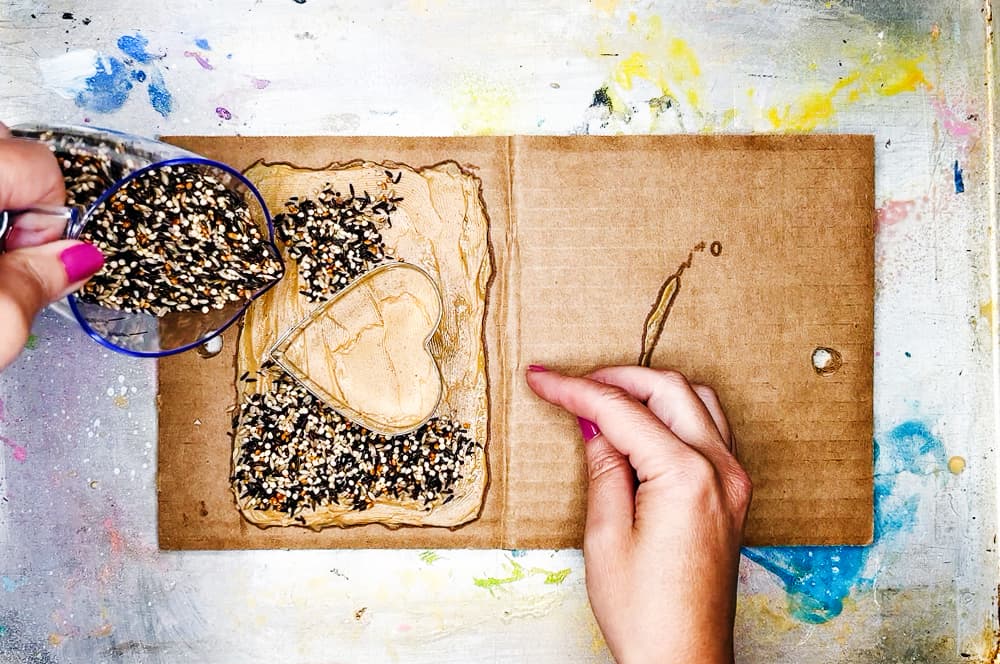
Once your peanut butter base is down, you can start making your seed mosaic. You can use a toothpick to draw a design in your peanut butter, make lines of seeds, create shapes, or just begin sprinkling!

Using a cookie cutter is a simple way to make interesting shapes and offers some fine motor skill practice.
Using a pitcher is an easy way to cover an area with seeds, and has the added benefit of providing pouring practice.

You can experiment with framing your design with a border of seeds.
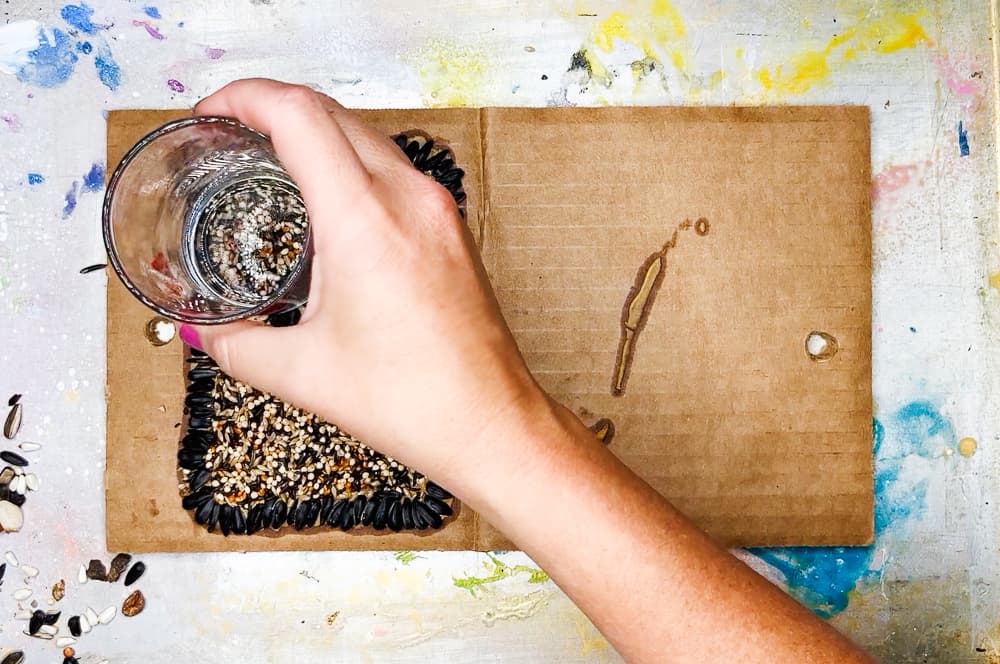
Using a small glass (or any object with a hard, flat surface) gently stamp over your entire design, making sure the seeds have been pressed into the peanut butter.

Time to add seeds to the other side! You can create a design that complements the side you’ve made or try something completely different.

Fold your cardboard into an a-frame, then gently insert your stick perch at the bottom.
Expect loose seeds to fall off when you fold your feeder. One thing I love about this activity is that it’s zero waste. Any seeds that don’t stick to the feeder can be tossed into the garden!
Cut a length of twine (or similar material) to thread through the center of your cardboard feeder and tie it into a loop to hang it. 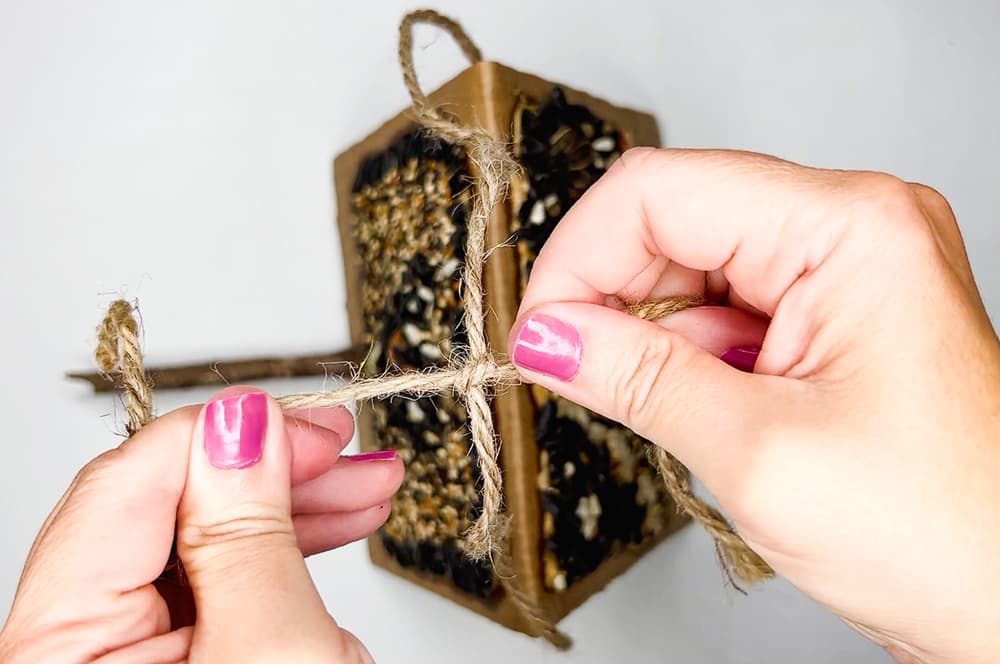

Find a good spot to hang your feeder where birds can spot it!
These feeders have been out for less than 24 hours, and we’ve already made so many exciting observations – for one, almost all of the sunflower seeds are already gone! It’s fun to watch the patterns of our seed mosaics change by the hour, and it has us paying attention to the food preferences of the birds in our area.
For some mosaic seed art inspiration, crop art made from seeds has been a unique favorite of the Minnesota State Fair for over 50 years! Check out crop artist Linda Paulson demonstrating her art-making process.
Having a good mixture of seeds ensures you’ll attract a diverse group of birds and give you a nice variety of natural colors and shapes to incorporate into your mosaic patterns. Here are a few of our favorites…

If your kiddos have been inspired to spend the rest of the day outside creating a wildlife oasis, try making a DIY bee bath, or build your own bug observation box with recycled supplies.
If you love this use of nature supplies, learn how to prep and preserve natural materials for crafts and play.
GETTING READY TO TRY this?
I love seeing all the ways people make these ideas their own! If you're sharing the results of one of our projects, mention or tag me with @barleyandbirch, or share it in the comments of one of our Pinterest project pins.