
Thirty simple invitations to make, explore, and wonder this June – no instructions required! Prevent the summer slide and use this creative inspiration for open-ended, self-led outdoor and indoor play activities for kids this summer.
When the days get long and the routines get loose, sometimes all it takes for kids to stay entertained is a little spark…
These short, open-ended prompts are designed to jumpstart imagination, inspire curiosity, and offer a jumping-off point for independent exploration.
Maybe you’re a parent looking to fill an unscheduled afternoon, or a summer camp coordinator or librarian looking for some children’s programming ideas.
These quick “creative sparks” provide an easy invitation to help kids think in unique ways, try something new, or turn their ideas into day-long playful adventures.
Use them as morning warmups, summer journal prompts, conversation starters, or screen-free boredom busters.
$5.99
A 39-page PDF set optimized for both color and black & white printing.
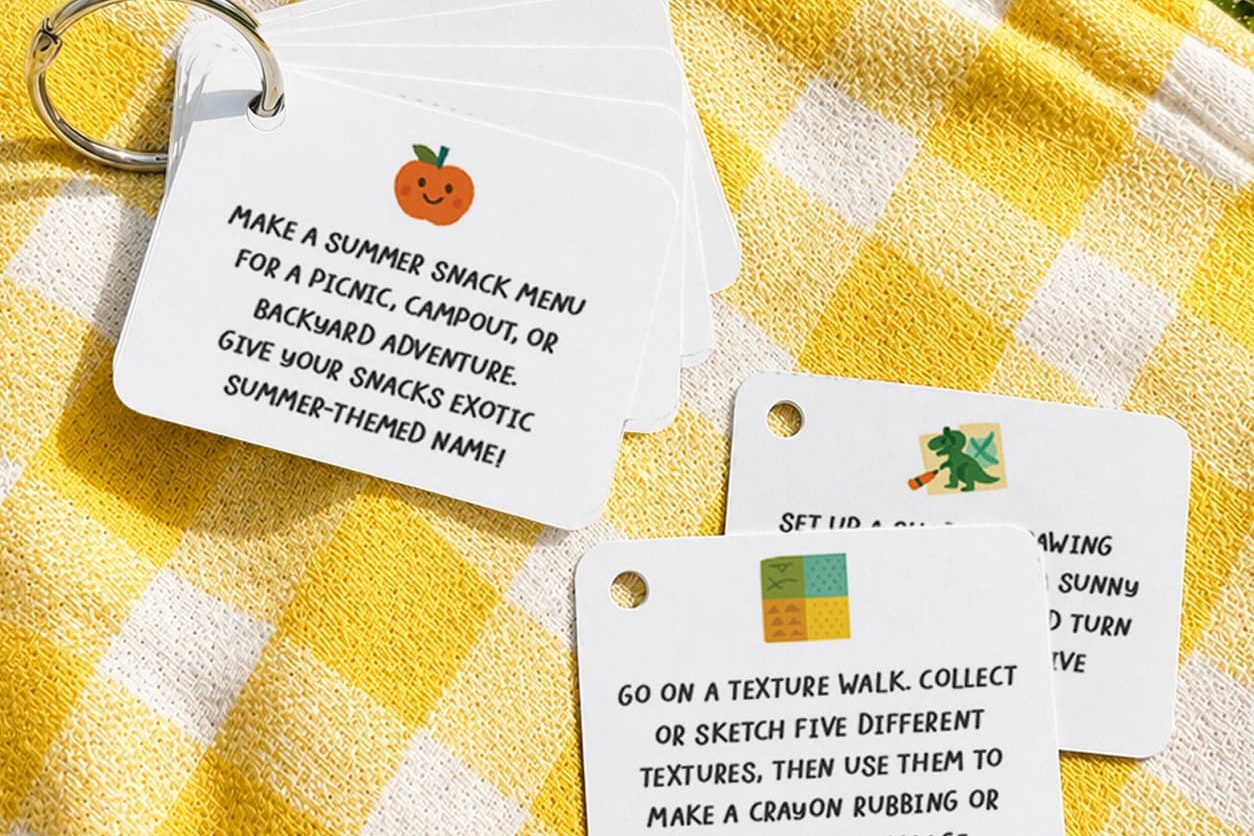
Each idea is simple enough to try on the spot but open enough to evolve into a self-led art project, storytelling session, nature discovery, or full-day imaginative play scenario.
Love this idea? Well, it’s your lucky day! These were so popular, we created a set of kids creative prompts for July as well.
Here are 30 June-themed creative thinking prompts you can pair with June holidays, seasonal observances, end-of-school transitions, and more!
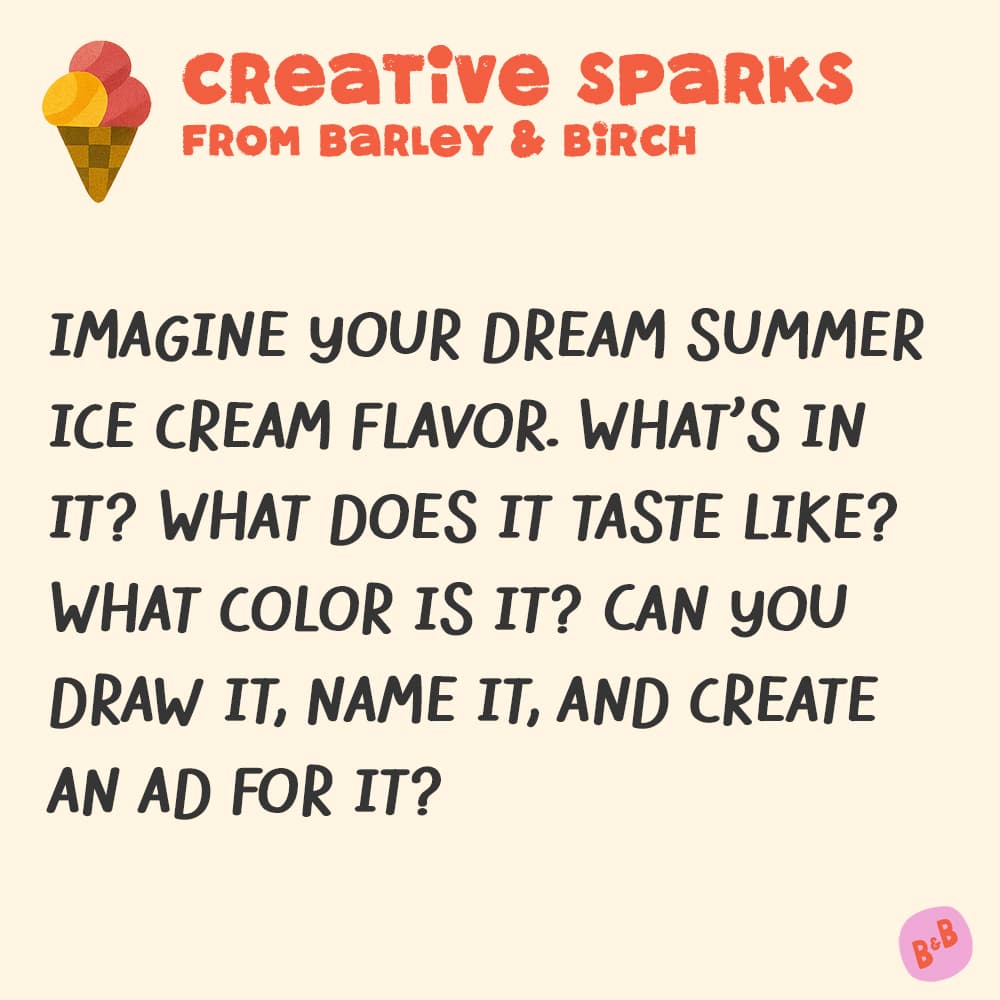
Imagine your dream summer ice cream flavor. What’s in it? What does it taste like? What color is it? Can you draw it, name it, and create an ad for it?
Set up an “Ice Cream Creation Station” where kids can sketch their dream flavor, design a label or menu card, and use collage materials or craft supplies (like pom-poms, paper, or clay) to build a 3D version.
Add a dramatic play twist by turning the space into a pretend ice cream shop.
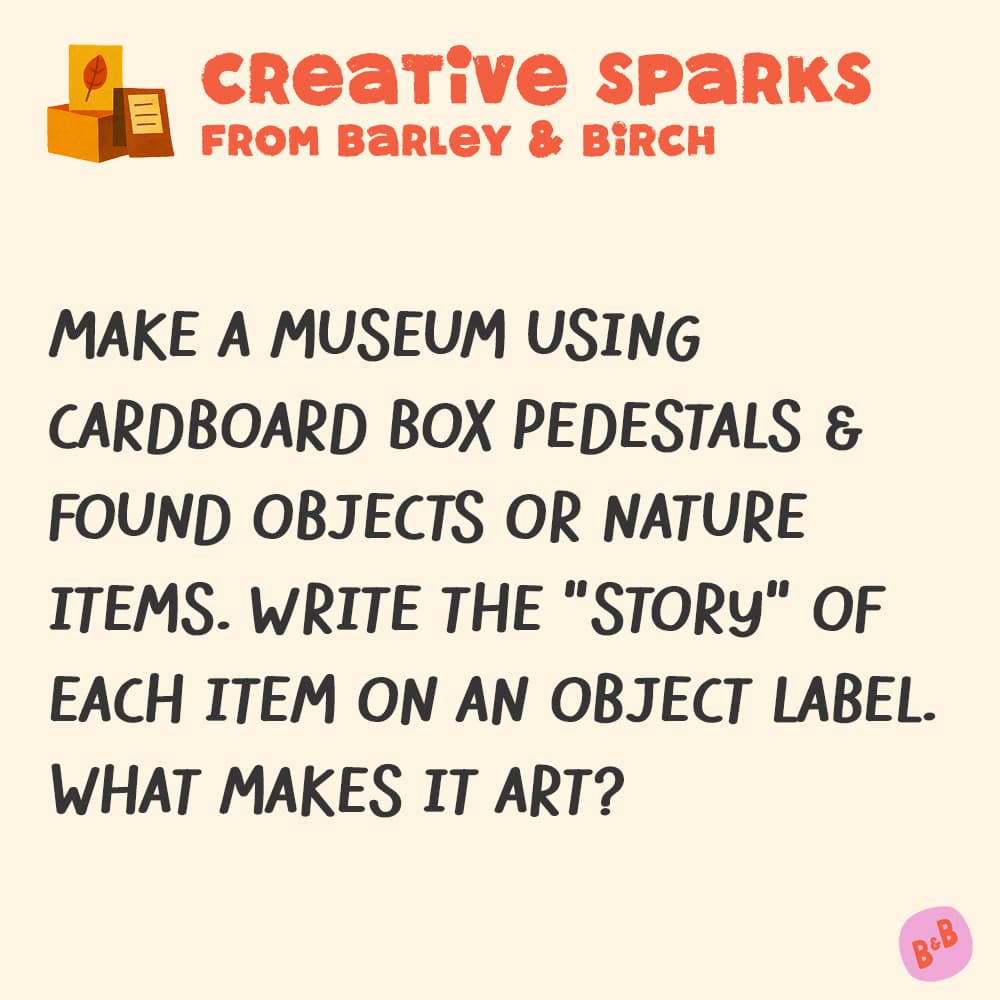
Make a museum using cardboard box pedestals & found objects or nature items. Write the “story” of each item on an object label.
What makes it art?
Once kids have set up their exhibits, invite others to tour the museum and ask questions, turning the space into a pop-up gallery or curiosity cabinet for a day!
Make a DIY “wind tester” with streamers or paper strips taped to a stick. How does the wind move in different spots or on various days?
Turn this into a weather investigation by helping kids find the best locations to try out their wind testers – behind a tree, near a wall, in an open field, etc.
Record how the streamers move in each spot and on different days, then compare the results in a simple observation journal or weather chart.
Grab a bucket of water and a paintbrush to “paint” magic disappearing art on the sidewalk & other surfaces. How long does the art take to vanish?
Try this as a timed art challenge! Have kids guess how long their art will last, then use a stopwatch to track it. For extra fun, they can create a series of “disappearing murals” and race to finish a story or scene before the water dries completely.
Have a friend fill a tray with small toys or June-themed objects, cover it with a towel, and take 30 seconds to look at it. Cover it back up and make a list of everything you remember on the tray.
Build on this by turning it into a memory competition or team game – add rounds with swapped trays, themed objects, or increasing difficulty (like adding red herrings).
Let kids take turns being the tray curator, choosing tricky themes like “things that roll” or “mini nature items” to challenge each other’s recall in creative ways.
Build a mini ” staycation resort” for a favorite toy using blocks, recyclables, or nature materials. Create a vacation itinerary for your tоу.
Extend the fun by turning it into a full vacation experience. Help kids write postcards or take “vacation photos” of their toy at each stop on the itinerary. They can even host a slideshow or storytime at the end of the day to share highlights from their toy’s resort adventure!
Collect or sketch five different textures, then use them to make a crayon rubbing or some kind of collage.
Take it further by creating a “texture storybook” where each rubbing or collage page represents a character, place, or moment in a story inspired by the textures.
Kids can turn their collected impressions into a creative narrative, imagining what kind of creature might live on a bumpy sidewalk or what happens in a forest full of soft, leafy shapes.
Make up your own holiday to celebrate the summer solstice – the longest day of the year. What is it called? How do you celebrate it?
Host a real celebration based on the invented holiday! Help kids create decorations, plan a themed snack or activity, and invite friends or family to join. They can even make a holiday flag, design a greeting card, or write a short origin story explaining how the tradition began.
Make a summer snack menu for a picnic, campout, or backyard adventure. Bonus: Give your snacks fun or exotic summer-themed names!
Extend the idea by turning it into a pop-up snack stand. Kids can create signs, take “orders” from friends or family, and serve their fun-named treats from a picnic blanket, cardboard booth, or backyard table. For extra flair, let them design a custom menu board or food truck logo to go with their summer snack theme!
Close your eyes & listen to the sounds outdoors for 2 minutes. What did you hear? Turn the sounds into a “soundscape” story or drawing.
Take it further by recording the actual sounds (if possible) and using them as the background for a narrated soundscape story or slideshow of the drawings. Kids can also assign each sound an instrument or color and turn it into a simple musical or visual composition to perform or display.
Set up a shadow drawing station with toys on a sunny day. Trace shadows and turn them into imaginative characters.
Create a full “Shadow Theater”. Once kids transform their traced shadows into characters, they can craft a simple story or play and present it using a cardboard stage or a narrated picture book made from their drawings. Add costume accessories or scenery to enhance the storytelling.
Invent a deep-sea creature adapted to live in the darkest depths of the ocean. What is its name? What special traits does it have?
Make a “Deep Sea Discovery Guide” where kids can draw their creature, describe its behaviors, and add it to a fictional marine field journal or trading card set. For an extra challenge, kids can design an underwater habitat shoebox diorama and present their findings as if they’re marine biologists on a research expedition.
Turn your backyard into a park or campsite where you’re the park ranger. Create a guided trail, a checklist of safety rules, or posters about wildlife sightings.
Turn a BIG cardboard box or playhouse into a ranger station where kids can hand out trail maps, lead guided tours, or give out “junior ranger” badges to visiting family members or stuffed animals. They can also host a nature talk or storytelling circle at their campsite to share their discoveries and park ranger wisdom.
Fold a simple paper fan, decorate it, then use it to experiment. What’s the strongest breeze you can create? What things can it move?
Take it further by turning fan experiments into a playful STEM challenge—set up a mini obstacle course or “fan-powered race” where kids try to move lightweight objects (like feathers, pom-poms, or paper boats) across a track or through tunnels using only their fan. Add scorecards or timers for extra excitement!
Design and name a new constellation. What’s the story behind it? Sketch it, make it with star stickers, or draw it with sidewalk chalk.
Create a night sky gallery where kids can craft their constellation on black paper with white pencil or glow-in-the-dark paint, then hang their creations in a dark room or outdoor tent to simulate stargazing. Add a storytelling circle where each child shares the legend behind their constellation.
Tell a story using 5-10 found nature objects – leaves, rocks, flower petals. They can represent places or characters or be secret symbols…whatever you can imagine!
Kids can write or draw a “nature story map” on a piece of paper or cardboard, arranging their objects into a landscape or timeline, then drawing paths, arrows, or speech bubbles to bring the story to life.
They can even film a short stop-motion video or photo series to retell their tale using the nature items as props.
Have a friend set up a “mystery bag” with household objects inside. Guess the contents by touch alone, then invent a new use for each item you guessed incorrectly.
After the guessing game, kids can sketch or build prototypes showing their imaginative new uses for the mystery items. For added fun, they can pitch their inventions Shark Tank–style to family members or create a pretend commercial for their favorite idea!
Try mirror drawing! Use both hands at once to draw a summer scene or an object that represents summer to you.
Display kids’ symmetrical masterpieces alongside their titles and artist statements about what summer means to them, turning their drawings into a summer art show.
For a fun twist on the original prompt, try mirror drawing with unexpected tools like sidewalk chalk, paintbrushes, or even finger paint on windows or plastic sheets.
Design a kite, then make it out of paper, recycled plastic bags, or whatever you have around the house. Can you get it to fly?
Put on a backyard kite festival: Kids can decorate their kites, name them, and create signs or tickets for the event. Add friendly competitions like longest flight, most creative design, or best crash landing, and invite family or neighbors to cheer them on!
Make a list of things that change in June (weather, plants, schedules, feelings). What’s the biggest change for you, and how does it make you feel?
Turn the list into a personal “June Changes” zine that kids can illustrate, adding a few reflections or short poems. Staple the pages into a mini booklet and share or swap zines with others to compare how June feels for different people!
Tape a large piece of paper to the wall & draw a life-size map of an imaginary place. Underwater cities, candy forests, secret islands…
What can you design?
Build on this by transforming the map into a full-scale interactive world. Kids can add pop-up landmarks, hidden flaps with surprises underneath, or QR-style codes (drawn or written clues) that link to made-up stories or quests.
Freeze small toys in water overnight. Invent a new tool to “excavate” them. Try with different tools. Which tool or method works best?
Turn this into an “Ice Excavation Lab” by setting up different test stations with tools like salt, warm water droppers, or brushes. Kids can wear DIY scientist badges, record their excavation times, and rate each method—then use their results to design and name the ultimate frozen rescue gadget.
Design a “signature” set of flip-flops. You can write a description or draw what they look like. For an extra challenge, draw them from different angles!
Creating a flip-flop fashion show or catalog. Kids can design multiple pairs for different summer activities (beach day, camping, space travel!) and write fun descriptions or slogans. Add a DIY runway or storefront display to show off their stylish summer collection!
Write a postcard from a place that doesn’t exist. You can make it up yourself, or use a fictional place from a book or movie.
Expand this by setting up a “Post Office of Imaginary Places” where kids can decorate mailboxes, design stamps, and write or trade postcards from multiple made-up worlds.
For extra fun, turn it into a weekly writing series where they send updates from their fictional travels or respond to mail from other invented characters!
Design your own report card for the end of the school year. Grade yourself on the things that you think are most important, or come up with a funnier list of skills.
Build on this by turning it into a whole end-of-year awards ceremony. Kids can present their custom report cards to friends or family, create silly certificates for made-up achievements (like “Best Tree Climber” or “Most Creative Excuses”), and reflect on the year.
Grab a toy car and build the longest track you possibly can for it – outside or inside!
Turn it into a track-building challenge where kids can measure their track length, time how fast the car travels, or add stunts like ramps and tunnels.
For extra excitement, invite others to build their own tracks and host a Toy Car Grand Prix with awards for creativity, speed, and distance!
Read a book, then design a board game based on the story.
Set up a “Book Game Night”. Have kids create game pieces, cards, and a rulebook, then invite friends or family to play and give feedback. They can even design a box cover and write a short game review explaining how the story inspired their design!
Use playdough or clay to sculpt something with your eyes closed. What did you make? Is it surprising? Can you turn it into something else?
Invite kids to sculpt with their eyes closed, then title their creation and write a short artist’s statement explaining the experience – what it feels like it might be, how it felt physically to create it, or what it was like to see their creation. Later, they can reshape it into a new creation and compare how their ideas have evolved.
Get down on the ground and draw the world that you see from an ant’s view.
Create an “Ant Explorer Field Guide” featuring labeled tiny landmarks, invent insect-sized street names, and written notes or fun facts. Add a magnifying glass and a field journal for an extra dose of pretend play!
Make a list of 5 things you’ve never done before that you’d like to try this summer – big or small!
Design a checklist poster, make badges or mini trophies for each completed goal, and document kids’ progress with photos, drawings, or journal entries as they check new accomplishments off of their lists.
Continue to fill your summer with more creativity by visiting our 31 kids creative prompt ideas for July!
GETTING READY TO TRY this?
I love seeing all the ways people make these ideas their own! If you're sharing the results of one of our projects, mention or tag me with @barleyandbirch, or share it in the comments of one of our Pinterest project pins.